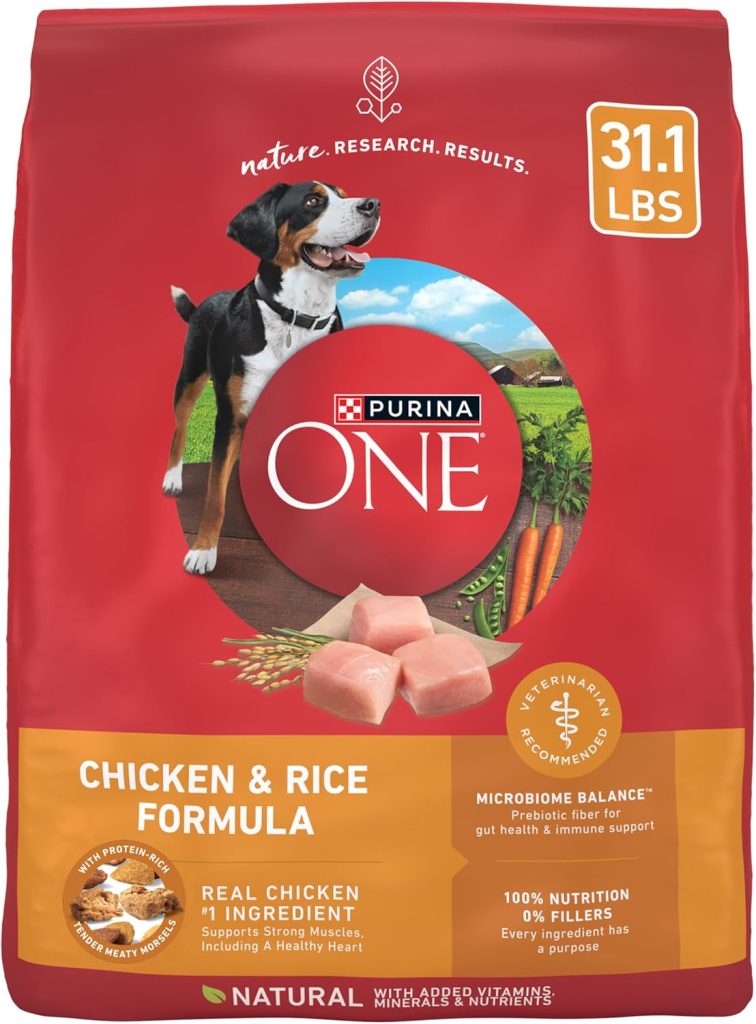
Purina ONE Chicken and Rice Formula Dry Dog
Purina ONE Chicken and Rice Formula Dry Dog
Overview
- Recipe: Chicken as the first ingredient, with rice as a carbohydrate source. It’s designed for adult dogs and typically includes protein, fats, vitamins, and minerals to support daily nutrition.
- Nutritional profile: Contains a balanced blend of protein, fat, fiber, and essential nutrients. The exact guaranteed analysis (protein, fat, fiber, moisture, etc.) can vary by formula and batch, so check the bag for the most accurate numbers.
- Varieties: Purina ONE Chicken & Rice is available in several variations (e.g., for adults, for small breeds, with certain life stages or size-specific formulas). The “Dry Dog Food” variant is the standard kibble.
What to consider
- Life stage: Ensure the formula matches your dog’s life stage (adult, senior, puppy). Purina ONE Chicken & Rice is commonly marketed for adults.
- Size/breed: There are size-specific options in the Purina ONE line (e.g., small breed versions). If you have a large or small breed, confirm the right kibble size and nutrient density.
- Health goals: If your dog has allergies, sensitivities, or a specific health issue (weight management, digestive tolerance, kidney issues, etc.), talk to your vet about whether this formula is appropriate or if a more specialized recipe is better.
- Allergies: The primary protein is chicken, with rice as the carbohydrate. If your dog has chicken or grain sensitivities, you’d want to consider a limited-ingredient or hypoallergenic option.
Feeding tips
- Feeding amounts: Use the feeding guidance on the bag as a starting point, then adjust based on your dog’s weight, age, activity level, and body condition. Regularly monitor weight and adjust portions to maintain a healthy condition.
- Transitioning: If switching from another food, do so gradually over 7–10 days (e.g., mix 25% new, 75% old for a few days, then 50/50, etc.) to minimize digestive upset.
- Fresh water: Always provide fresh water.
- Storage: Store in a cool, dry place. Reseal the bag or use an airtight container to keep kibble fresh.
Pros and potential downsides
- Pros: Generally well-regarded by many dog owners for a good balance of price and quality, widely available, convenient feeding schedule.
- Cons: Some dogs may do better on grain-free or alternative protein sources depending on individual needs; always check for any recalls or ingredient changes on Purina’s site.
How to decide
- If your dog loves it, tolerates it well, and your veterinarian approves, it’s a reasonable everyday option.
- If your dog has specific needs (weight management, sensitive stomach, skin issues, allergies), ask your vet for a tailored recommendation and consider alternative Purina ONE formulas or other brands that fit those needs.
If you want, tell me:
- Your dog’s age, weight, activity level
- Any known allergies or health conditions
- Whether you’re considering a different formula (size-specific, life-stage, or special needs)
I can then help tailor a feeding plan, approximate daily portions, and compare options.